
Key Advances in MBBR Technology for Low-Temperature Wastewater Treatment
Low temperatures (≤15℃), especially the drop to 6℃ or lower in winter in northern and high-altitude regions, often hinder the efficiency of traditional wastewater treatment systems, making it difficult for them to meet discharge standards for COD and ammonia nitrogen. However, moving bed biofilm reactor (MBBR) technology has emerged as a reliable solution, thanks to its practical design and operational characteristics that ensure stable performance in cold conditions .
The core of MBBR’s success in low-temperature environments lies in its suspended carrier system. Carriers made of common materials such as polyethylene (PE), polypropylene (PP), and high-density polyethylene (HDPE) provide large surface areas for microbes to attach and grow .The conventional activated sludge process is sensitive to temperature fluctuations. When the temperature is low (≤15℃), the activity of nitrifying bacteria tends to decrease, leading to significant fluctuations in treatment efficiency. In contrast, the suspended carriers in the MBBR process can enrich microorganisms with long generation cycles and strong low-temperature tolerance (such as cold-tolerant nitrifying bacteria and psychrotrophic heterotrophic bacteria), thus exhibiting superior low-temperature adaptability.
Cold-adapted microbial acclimation further enhances MBBR’s low-temperature efficiency. By gradually inducing and selecting dominant cold-tolerant strains, this technology boosts microbial activity, ensuring the system operates stably without relying on complex equipment . This biological optimization directly addresses the issue of reduced microbial activity caused by low temperatures, ensuring consistent treatment results.
Simple operational adjustments also play a key role in improving MBBR’s performance in cold conditions. Intermittent aeration has been proven to achieve complete nitrification at 10℃, while appropriately lowering the carbon-to-nitrogen (C/N) ratio enhances the removal efficiency of COD and ammonia nitrogen . Extending hydraulic retention time (HRT) helps the system adapt to seasonal cooling; at 5℃, 8 hours is the minimum HRT required to ensure stable nitrate denitrification . These tweaks require no major equipment overhauls but significantly improve treatment outcomes—typical MBBR systems achieve 75-95% COD removal and 91-99% BOD removal in low temperatures .
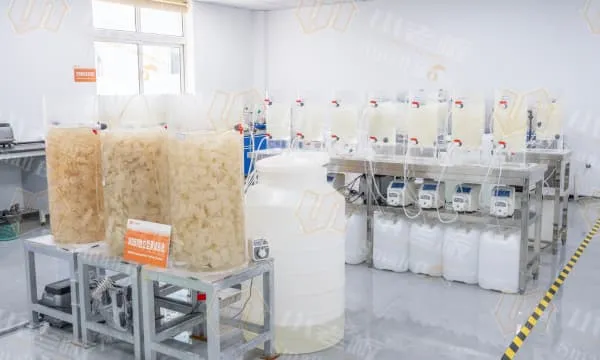
Combined processes like A/O-MBBR further expand MBBR’s applicability. This combination strengthens the system’s resistance to shock loads, making it suitable for treating both municipal sewage and industrial wastewater . Additionally, MBBR can be integrated into existing wastewater treatment facilities by using original tanks, avoiding the need for new construction and reducing upgrade costs and timelines.
For those requiring efficient and stable wastewater treatment in cold climates, MBBR technology offers a practical, results-driven solution. Its reliance on common carrier materials, simple operational adjustments, and compatibility with existing infrastructure makes it a straightforward choice for consistent performance—even when temperatures plummet.
Relating Reading:MBBR Biofilter Media Boosts Aquaculture Profits


