
Oil and Temperature Resistant PVC Pellets Drive Multi-Industry Innovation
In today's plastics market, PVC pellets—a fundamental and widely used raw material—are gaining renewed vitality through technological innovation. Particularly with the rapid development of new energy vehicles, high-end medical equipment, and architectural decoration industries, market demand for temperature-resistant and oil-resistant PVC pellets is growing increasingly urgent. Through modification techniques, PVC pellets achieve breakthroughs in oil and temperature resistance, providing professional guidance for your material selection.
I. What Are High-Performance PVC Pellets?
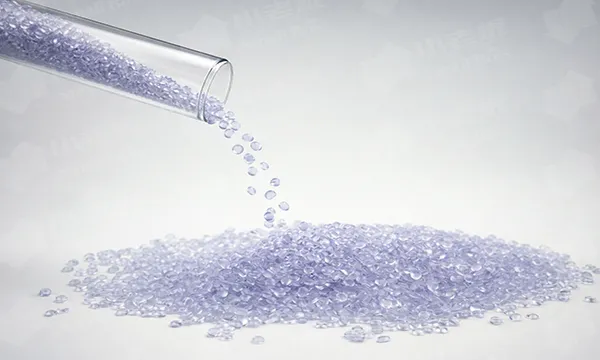
PVC pellets (polyvinyl chloride pellets) are plastic intermediates produced by blending PVC powder with additives such as plasticizers, stabilizers, and modifiers, followed by mixing, plasticizing, and pelletizing. While standard PVC pellets possess certain strength and chemical stability, their performance often degrades under extreme temperatures or oily conditions.
To meet demanding application requirements, specialized temperature-resistant and oil-resistant PVC pellets have been developed through technical innovations. For instance, utilizing high-polymerization PVC resin creates longer molecular chains with increased entanglement points, significantly enhancing thermal stability and resistance to solvent extraction. These materials retain PVC's inherent flame retardancy and insulation properties while achieving heat and oil resistance comparable to specialty rubbers.
II. Core Technology Principles for Oil and Temperature Resistance
Why do some PVC pellets remain stable in high-temperature and oily environments? This is primarily due to the following modification technologies:
1. High Polymerization Degree and Molecular Design
Temperature-resistant PVC pellets typically utilize high-molecular-weight PVC resin. Increased molecular weight creates more entanglement points between molecular chains, making macromolecular chain slippage difficult. This enhances the material's tensile strength and heat resistance. Materials based on high-polymerization-degree PVC exhibit low compression set and thermal deformation, maintaining excellent resilience even at elevated temperatures—a property that earns them the designation of thermoplastic elastomers.
2. Alloying and Blending Modification
To enhance the performance of oil-resistant PVC pellets, polar polymers are often incorporated into formulations. For instance, oil-resistant PVC pellets are frequently modified by adding nitrile rubber (NBR). NBR itself possesses excellent oil resistance. When blended with PVC, it effectively reduces the migration rate of plasticizers, thereby preventing material swelling or softening during prolonged exposure to engine oil, gasoline, or chemical solvents.
3. Optimization of Additive Systems
High-performance temperature-resistant PVC pellets utilize heat-resistant plasticizers (e.g., trioctyl trimellitate) and composite stabilizers in their formulations. For instance, incorporating organic heat stabilizers enables products to achieve thermal aging whiteness exceeding 82%, ensuring resistance to yellowing or decomposition during high-temperature processing and use.
III. Application Scenarios for Heat-Resistant PVC Granules
The emergence of heat-resistant PVC granules has shattered the long-held perception that traditional PVC is “heat-sensitive.” Currently, the long-term operating temperature range of specialty PVC granules on the market has been expanded to -50°C to +125°C, or even higher.
Electrical Wiring and Cables: In new energy vehicle charging stations and engine-area wiring harnesses, heat-resistant PVC pellets serve as sheathing materials. They must withstand high temperatures in engine compartments while maintaining flame-retardant properties. Modified PVC pellets pass UL 1581 heat resistance testing, meeting temperature ratings of 105°C (220°F) or even 125°C (253°F).
Industrial Hoses and Seals: In hydraulic systems and pneumatic equipment, hoses and sealing strips made from oil-resistant PVC pellets maintain elasticity and prevent leakage during prolonged exposure to hydraulic fluids. Certain high-polymerization PVC products are even utilized for manufacturing high-pressure oil lines.
IV. Performance Advantages of Oil-Resistant PVC Pellets
In terms of oil resistance, PVC pellets have achieved a qualitative leap through modification. Particularly, PVC/NBR blends modified with nitrile rubber significantly enhance oil resistance and tear resistance while maintaining PVC's rigidity.
Chemical Resistance: Oil-resistant PVC pellets not only exhibit outstanding resistance to mineral oils and vegetable/animal fats but also withstand corrosion from chemical solvents like acids and alkalis. This makes them an ideal material for chemical pipelines, petroleum storage tanks, and automotive fuel lines.
Low Migration & Eco-Friendly: Premium oil-resistant PVC pellets overcome the common issue of plasticizer migration in standard PVC through optimized formulations. This prevents material hardening or contamination of media caused by plasticizer leaching.
V. How to Identify High-Quality PVC Pellets?
When selecting PVC pellets, especially for buyers with strict requirements for temperature-resistant and oil-resistant PVC pellets, evaluation can be conducted from the following dimensions:
Assess thermal stability: Using a thermogravimetric analyzer (TGA), high-quality temperature-resistant PVC pellets exhibit minimal mass loss at high temperatures and do not produce gases or discolor due to thermal decomposition.
Mechanical Properties: Test strips made from oil-resistant PVC pellets should maintain high levels of tensile strength and elongation at break after oil immersion testing. Typically, elongation at break should exceed 220%-300%, with tensile strength ≥13 MPa.
VI. Verify Certification Standards: PVC pellets for specialized applications must carry relevant certifications. For instance, temperature-resistant PVC pellets used in automotive wiring harnesses must comply with corresponding industry standards.
VII. Future Trends: From Conventional Materials to Functional Materials
With the advancement of the “dual carbon” strategy, the PVC pellet industry is evolving toward functionalization and greening.
New Energy Sector: For lithium battery encapsulation and photovoltaic equipment, temperature-resistant PVC pellets are enhancing barrier properties and weather resistance through nano-modification technology.
Lightweight Automotive: Utilizing micro-foaming technology, oil-resistant PVC pellets achieve weight reduction while maintaining strength, and have been applied in automotive interior components.


