
How Much MBBR Media Is Needed? Start with Treatment Load, Then Check Tank Volume
How Much MBBR Media Is Needed? Start with Treatment Load, Then Check Tank Volume
A reliable MBBR media quantity cannot be selected from tank volume alone. The correct starting point is the treatment duty: calculate what the biological process needs to remove first, then determine the carrier volume, and finally check whether the tank, hydraulics, mixing, aeration and screening arrangement can support it.
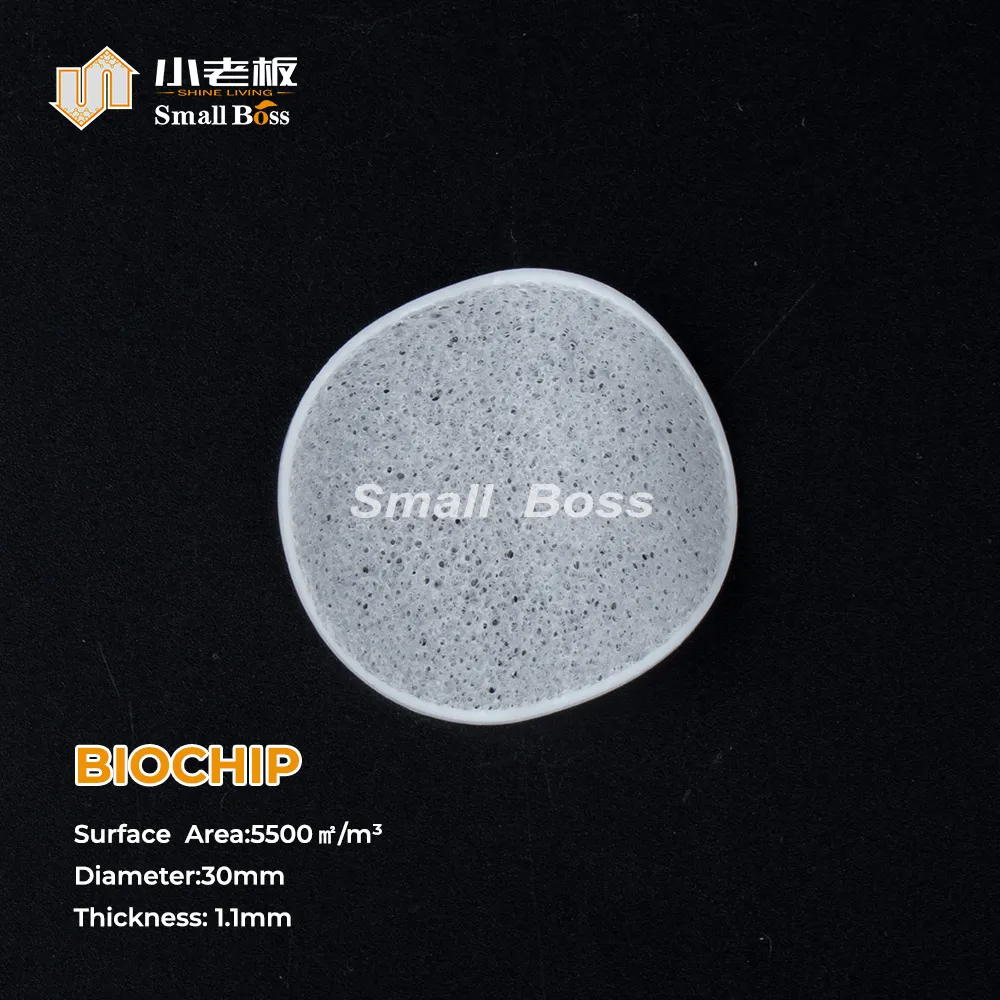
Biochip MBBR media. Official product material; not a performance claim.
The Short Answer: Tank Volume Is a Check, Not the Starting Point
There is no reliable universal answer such as “add a fixed percentage of media” or “buy a fixed number of cubic metres per day of flow.”
In an MBBR, the carrier is the surface on which biofilm develops, but the amount required depends on the treatment duty assigned to that biofilm. Start with the wastewater load and the required effluent objective. Then test whether the existing or proposed tank, circulation and retention arrangement can support that duty.
For a preliminary discussion, a process engineer normally works from average and peak flow, influent and required effluent values for the relevant parameters, operating temperature, the reactor volume that is actually available, and the intended aerobic or anoxic function.
The carrier volume follows a process calculation and is then checked against hydraulics, mixing, retention and screening. This is why two tanks with the same nominal volume can require different carrier selections.
What You Are Selecting When You Buy MBBR Media
MBBR media is not simply bulk plastic volume. It is a protected surface and a geometry that must remain mobile in the reactor while biofilm forms. The process uses free-moving carrier elements in an aerated or non-aerated basin. The reactor is therefore a system: carrier, tank, aeration or mixing, retaining screen and the incoming wastewater all matter together.
Use the product page as the product reference, not as a performance guarantee. The current Small Boss Biochip page states a round-paraboloid carrier with a protective outer ring, dimensions of 30 × 1.0 ± 0.2 mm, stated surface area of 5500 m²/m³ and density of 0.95 ± 0.02 g/cm³. These are useful product-identification inputs. They do not, by themselves, prove a removal rate for a particular wastewater, because loading, biofilm development, water quality, oxygen transfer and temperature vary by project.
| Item | Published Reference |
|---|---|
| Shape | Round paraboloid with protective outer ring |
| Dimensions | 30 × 1.0 ± 0.2 mm |
| Stated surface area | 5500 m²/m³ |
| Stated density | 0.95 ± 0.02 g/cm³ |
- Define the treatment job. Separate carbon removal, nitrification, denitrification or polishing duties instead of treating “wastewater treatment” as one number. Record the influent range, required outlet range, operating hours and seasonal temperature. Industrial wastewater should also identify variability, salinity, inhibitory compounds, suspended solids and upstream equalisation.
- Convert flow and concentration into the loading case the process must handle. The design case is not necessarily the monthly average. Peak hydraulic flow, peak mass loading and upset conditions can govern different parts of the design. A supplier can use this information for a preliminary carrier-volume discussion, but final sizing belongs in the project process design and should be checked against pilot data or comparable validated operating data where risk is material.
- Select a carrier family and verify the specification basis. Compare the protected or stated surface-area basis, dimensions, density, geometry and the intended tank configuration. Do not compare two products only by a large “surface area” headline unless the basis, measurement method and usable/protected area definition are clear.
- Check usable tank volume and carrier fill. Carrier quantity occupies reactor volume and must still leave the hydraulic and mixing conditions required for movement. The decision is therefore not “how much media fits”; it is “how much active carrier volume can this reactor operate with while keeping the media in motion and retained.”
- Check the equipment around the media. Screens, air distribution, mixing energy, inlet arrangement and solids management can determine whether a technically reasonable carrier choice works in practice. A design calculation that ignores the retention screen or turbulence is incomplete.
Why a Surface-Area Figure Cannot Be Used as a Stand-Alone Promise
A stated surface-area figure helps identify a carrier and compare a defined specification. It cannot be converted directly into guaranteed treatment capacity without the operating conditions. Published MBBR literature identifies hydraulic retention time, temperature, dissolved oxygen, carrier filling rate and influent pollutant composition as important variables. Carrier type, size and structure can also affect biofilm behaviour and nitrification results in controlled studies.
For that reason, this page does not publish a universal “one cubic metre treats X m³/day” rule, a fixed removal percentage or a guaranteed start-up period. Those statements would be misleading without the influent, target, tank and operating conditions.
A transparent calculation should name its design basis, carrier model, assumed loading rate, temperature, carrier fill, reactor volume and safety factors.
Use the Existing Tank to Decide Whether a Retrofit Is Realistic
For a retrofit, begin by measuring the active liquid volume rather than relying only on drawing labels. Then review peak flow, existing air blowers or mixers, diffuser layout, available headroom, screen location, maintenance access and the downstream solids-separation arrangement.
MBBR is often considered where an existing biological basin needs capacity improvement and space is constrained, but it is not a drop-in bag of media. The carrier must circulate without escaping; the hydraulic path must avoid dead zones; and the biological objective must match the conditions in that zone.
If the required media volume is large relative to the available reactor volume, the answer may be to split treatment duties, add a reactor stage, change the operating strategy, use another carrier geometry or reconsider the treatment train. That is a process decision, not a marketing claim.
A Product-Led Discussion
If your project needs a disc-shaped biochip carrier, review the Biochip product page before requesting a preliminary calculation.
The published page identifies the as a 30 mm by 1.0 ± 0.2 mm biochip with stated 5500 m²/m³ surface area and 0.95 ± 0.02 g/cm³ density. Match the requested product against the process drawing and retention screen design.
Confirm the current specification with the supplier before purchase, especially where a project specification, laboratory test, certification requirement or third-party approval applies.
The useful question is not “is the best media?” It is “does this geometry and stated specification fit the required duty and the available reactor system?” That is the question an engineer can evaluate and a credible supplier can answer with project-specific boundaries.
Questions to Settle Before Moving to a Quotation
Provide the following project information before requesting a preliminary carrier-volume estimate:
- Recent influent analysis, including units and sampling basis
- Average and peak flow
- Required outlet targets
- Treatment purpose for the relevant reactor
- Operating temperature range
- Existing or proposed tank dimensions and active volume
- Current aeration or mixing details
- Retention screen/opening information
- Project delivery location
These details are not a bureaucratic checklist. They determine whether a carrier-volume estimate can be tied to an actual treatment system rather than to a generic sales number.
For ongoing MBBR design reading, see our MBBR carrier selection guide and our guide to MBBR surface-area loading concepts . Those pages are supporting references; a project design must still be checked for its own wastewater and equipment conditions.
Frequently Asked Questions
Can I size MBBR media from tank volume alone?
No. Tank volume is checked after the treatment load, required effluent, carrier specification, temperature, mixing and retention constraints are defined.
Does a higher stated surface area automatically mean higher treatment capacity?
No. Surface-area definitions and usable-area bases must be comparable, and actual treatment depends on wastewater, loading, biofilm condition, hydraulics and oxygen or mixing conditions.
What details are currently published?
The current product page states a 30 × 1.0 ± 0.2 mm Biochip, stated surface area of 5500 m²/m³ and density of 0.95 ± 0.02 g/cm³. Confirm the current specification before procurement.
What information is needed for a preliminary media-volume discussion?
Average and peak flow, influent and target effluent values, temperature, treatment duty, tank active volume, aeration or mixing information, screen details and delivery location.
Inquiry Guidance
For a preliminary carrier-volume discussion, please provide:
- Average and peak flow
- Influent and target effluent values
- Temperature range
- Treatment duty
- Active tank volume
- Aeration or mixing details
- Screen information
- Delivery location
Submit this information through the Small Boss MBBR contact page for a preliminary discussion.
Related MBBR Resources
Technical Guide to MBBR Suspended Carrier Selection and Application
How to Calculate Surface Area Loading Rate When Using MBBR Bio Media
More MBBR Bio Filter Media Technical Articles


