
DISC DIFFUSERS VS. TUBE DIFFUSERS
In wastewater aeration systems, fine bubble diffusers are known for their incredible oxygen transfer efficiency and their energy consumption savings. They can reduce aeration energy consumption by 25% to 75% — and coarse bubble diffusers are renowned for their mixing power. Aeration diffusers come in a few different styles — two popular ones are tube diffusers and disc diffusers.
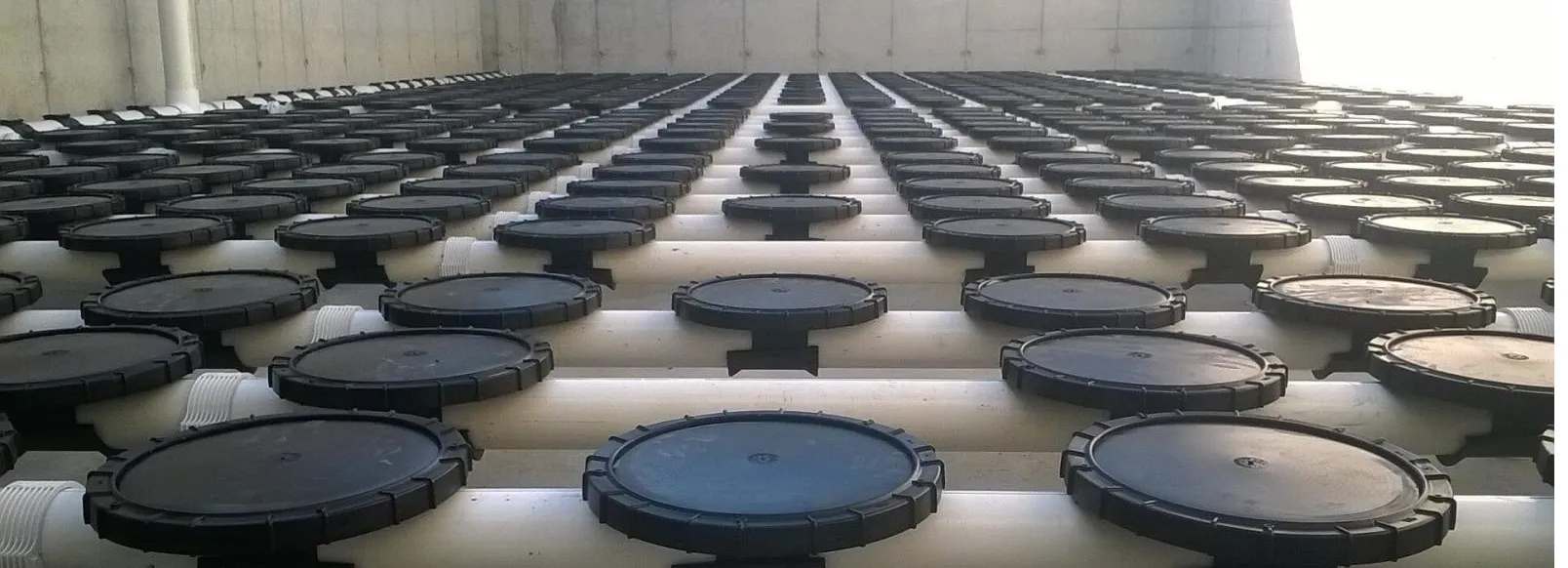
WHAT IS THE DIFFERENCE BETWEEN DISC DIFFUSERS AND TUBE DIFFUSERS?
The main difference between disc diffusers and tube diffusers is their shape. Disc diffusers generally have flat, circular shapes, whereas tube diffusers are long, narrow cylinders. Both are useful for supplying oxygen in wastewater aeration applications.
How Disc Diffusers Work and Their Benefits
Disc diffusers, such as the widely used 9-inch fine bubble versions, are common in wastewater treatment. They consist of disc-shaped membranes made from ceramic, plastic, or EPDM rubber. These membranes are attached to pipes and blowers. Air is pushed through the pipes by the blowers, and it escapes as bubbles through tiny slits or pores in the diffuser membranes. These bubbles aerate the wastewater by transferring oxygen to the water.
Benefits of Disc Diffusers
l Minimal Maintenance: Disc diffusers require little upkeep, making them ideal for tanks where maintenance is difficult.
l Long Lifespan: They are durable and last a long time, especially in tanks where replacing diffusers is expensive and time-consuming.
l Slow Failure Rates: The small holes in disc diffusers mean that even if a hole cracks, it leaks air slowly, reducing system compromise.
l High Oxygen Transfer Efficiency: Smaller bubbles produced by disc diffusers have a larger surface area for oxygen transfer.
l Versatility: Disc diffusers work well in various systems, making them a good all-purpose option for wastewater treatment.
Uses for Disc Diffusers
l Shallow Tanks: Their high oxygen transfer efficiency makes them perfect for shallow tanks where less mixing is needed.
l Fixed Systems: They are great for fixed systems where pipes are permanently attached to the floor. This setup minimizes buoyancy issues and leverages the durability and low maintenance needs of disc diffusers, crucial for systems where diffusers cannot be easily removed for repairs.
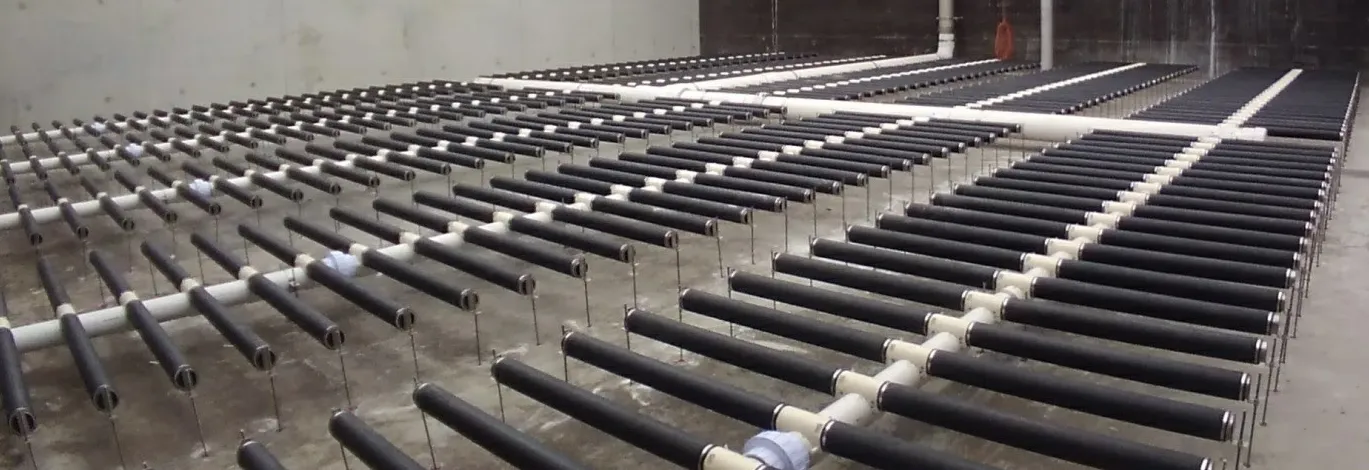
Tube diffusers
Tube diffusers function similarly to disc diffusers, featuring long, cylindrical membranes attached to pipe and blower systems for wastewater aeration. They often utilize protective coatings to reduce fouling.
Advantages of Tube Diffusers
· Efficient Design: Their slender shape allows tube diffusers to fit into tanks with limited space.
· Enhanced Mixing: Tube diffusers produce larger bubbles, enhancing mixing capabilities.
· Cost-Effective: Tube diffusers are more economical due to reduced stainless steel usage, favoring plastic and rubber materials.
· Neutral Buoyancy: This feature provides an advantage in specific aerator configurations.
· Labor Savings: The minimal stainless steel required results in reduced labor time and faster delivery, ideal for quick turnaround projects.
Applications of Tube Diffusers
· Deep Tanks or High Solids: Ideal for large tanks or wastewater with high biosolid content due to superior mixing.
· Narrow Tanks: Their compact fit makes them suitable for tanks with limited space.
· Retrievable Grids: Tube diffusers are preferred for retrievable grid systems because their neutral buoyancy prevents movement issues, reducing the need for ballast weights and additional stainless steel.
Whether you need disc diffusers or tube diffusers for your wastewater aeration system, let JUDE Aeration be your trusted source. Our experienced engineering teams and industry-leading technology make our diffuser systems some of the best in the business


