
Rigid vs Flexible PVC Conduit: Which is the Better Choice for Your Project?
Release Time:2025-05-14
Rigid vs Flexible PVC Conduit: Which is the Better Choice for Your Project?
When it comes to protecting electrical wiring, fluid transportation, or data cables in industrial, commercial, and residential applications, choosing the right PVC conduit is crucial. Two popular options are rigid PVC conduit and flexible PVC conduit (also known as flexible PVC corrugated conduit). In this guide, we'll break down their key differences, advantages, and ideal use cases to help you make an informed decision.
1. Material & Structural Design
Rigid PVC Conduit
Rigid PVC conduit is made from unplasticized polyvinyl chloride (uPVC), offering high structural strength and impact resistance. Its smooth, straight design provides excellent protection against physical damage in stable environments. However, it lacks natural flexibility and requires specialized tools (such as benders or connectors) to create curves or adapt to complex layouts.
Flexible PVC Conduit
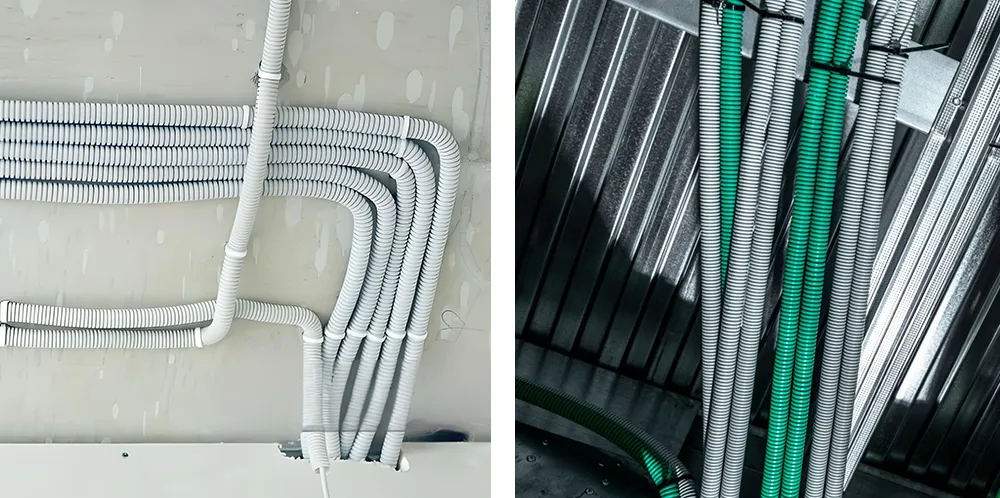
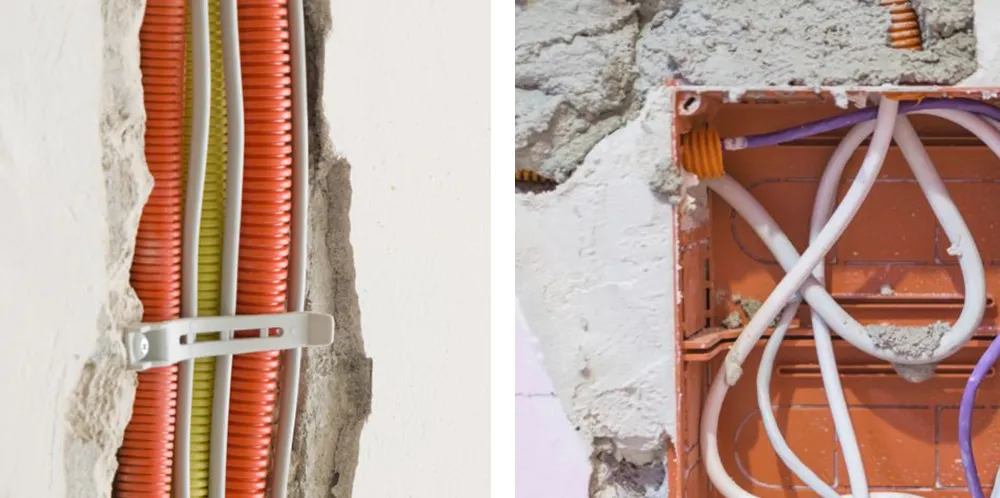
Our flexible PVC conduit features a corrugated design with annular ribs, combining durability with bendability. Manufactured from a specially formulated PVC compound, it maintains rigidity while allowing manual shaping without tools. This "bend-not-break" design makes it ideal for installations requiring frequent movement, tight spaces, or irregular routing.
2. Application Scenarios
When to Choose Rigid PVC Conduit
- Straight, Fixed Installations: Ideal for residential electrical wiring, outdoor signage, or long-distance cable runs in predictable environments (e.g., concrete slabs, interior walls).
- Low-Movement Areas: Suited for static structures where minimal vibration or thermal expansion is expected.
When to Opt for Flexible PVC Conduit
- Industrial & Hazardous Environments: Excels in chemical plants, oil refineries, or wastewater treatment facilities due to its corrosion-resistant properties, protecting against acids, alkalis, and aggressive fluids.
- Complex or Dynamic Layouts: Perfect for automotive manufacturing (engine compartment wiring), agricultural irrigation (adapting to uneven terrain), or construction sites with frequent layout changes.
- Emergency Repairs: Its quick-install nature reduces downtime during urgent fixes, such as temporary power setups or disaster relief operations.
3. Installation & Cost Efficiency
Rigid PVC Conduit Installation
- Requires precise measurements, cutting, and fitting with cement or mechanical couplings.
- Bending requires heat or hydraulic benders, increasing labor time and skill requirements.
- Best for large-scale projects with clear, linear designs.
Flexible PVC Conduit Installation
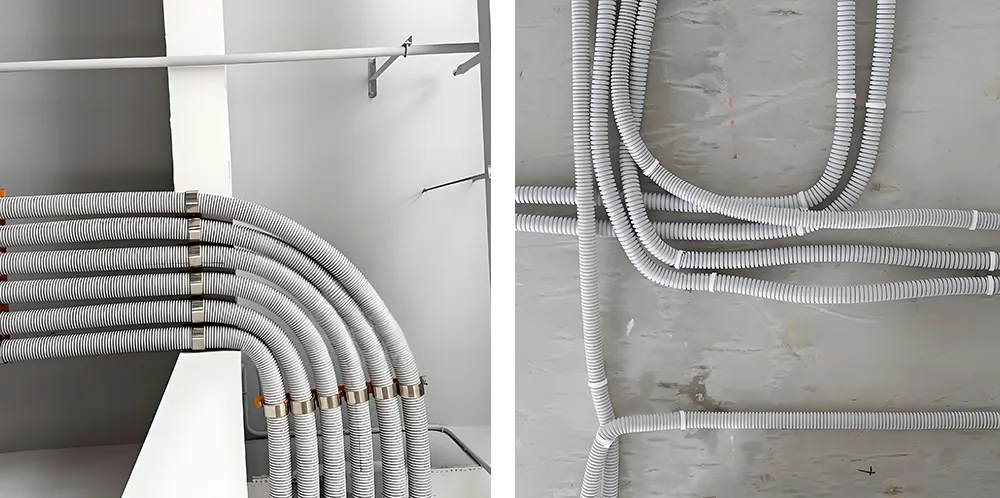
- Tool-Free Flexibility: Can be hand-bent to tight radii (minimum bend radius: 3x conduit diameter), eliminating the need for pre-formed elbows.
- Lightweight and fast to install: Reduces labor costs by up to 40% compared to rigid systems, especially in hard-to-reach areas (e.g., ceilings, underfloor cabling).
- Includes UV-resistant outer layers for direct burial or outdoor use without additional protection.
4. Performance & Longevity
|
Feature
|
Rigid PVC Conduit
|
Flexible PVC Conduit
|
|
Temperature Range
|
-10°C to +60°C
|
-20°C to +60°C (withstand extreme cold/hot)
|
|
Chemical Resistance
|
Good (moderate fluids)
|
Excellent (resists solvents, acids, and salts)
|
|
Vibration Resistance
|
Low (brittle under stress)
|
High (flexible ribs absorb shocks)
|
|
Service Life
|
20-30 years (above ground)
|
50+ years (underground/buried applications)
|
Our flexible PVC conduit’s ribbed structure also minimizes friction, reducing pressure loss in fluid transmission and enabling easier cable pulling—critical for high-frequency data cables or pneumatic systems.
5. Cost Considerations
While rigid PVC conduit may have a lower upfront cost, total project expenses can rise due to:
- Specialized tools and skilled labor for bending/fitting.
- Higher replacement costs for damaged sections (requires cutting and re-welding).
Flexible PVC conduit offers better long-term value by:
- Lowering installation time and labor costs.
- Reducing maintenance needs (resistant to cracking from ground shifts or thermal expansion).
- Eliminating the need for additional protective coatings in harsh environments.
Which One Should You Choose?
- Go Rigid If: Your project has simple, straight routes, low chemical exposure, and static conditions.
- Choose Flexible If: You need adaptability, corrosion resistance, or durability in challenging environments—especially for industrial, outdoor, or buried applications.
At Small Boss, we specialize in manufacturing high-quality flexible PVC corrugated conduit designed for performance and ease of use. Our products meet international standards (CE, RoHS) and come in various sizes (16mm to 150mm) to suit your specific needs.
Request a Free Sample or Contact Our Team today to discuss how our flexible PVC conduit can optimize your next project!
Prev: No data


