
MBBR Bio Filter Media
 |
The history of MBBR development is not long. It originated in the 1980s, developed in the 1990s, and is widely used in the 21st century. In the 1980s, Professor Morper of LINDE AG (Germany) developed the MBBR wastewater treatment process, and after promotion, it was used in the secondary treatment of wastewater in Europe. In 1988, Australia's wJ paper mill applied MBBR to treat wastewater generated in papermaking, and received very good results. In the 1990s, the United States absorbed this advanced process and created its own Captor wastewater treatment process. With the recognition of the MBBR treatment effect in the market, this process has been valued and adopted by many countries. So far, more than 400 sewage treatment plants have used this process. With the increase of promotion and popularization, MBBR technology will show its good performance more and more and play a greater role. |
MBBR is based on the traditional CAS-Conventional Activated Sludge (i.e. activated sludge process), using the filler of the suspended carrier as the carrier of microbial activity to ensure that it is in a fluidized state. MBBR has a strong ability to remove nitrogen and ammonia, the specific surface area of the suspension carrier is relatively large, and the number of microorganisms on its surface and inside is large, making the sludge concentration 6-10 times that of CAS. Strong purification ability, convenient for reclaimed water circulation.
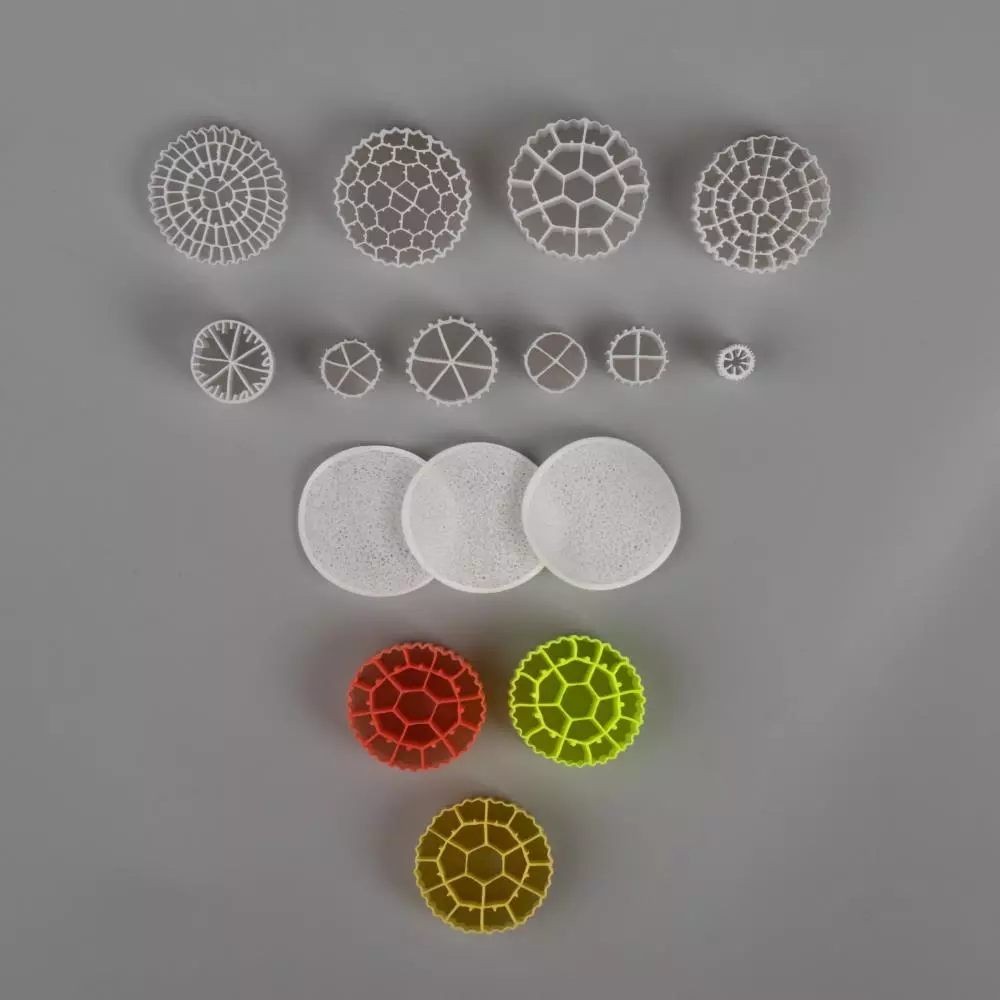
Tongxiang Small Boss Special Plastic Products Co., Ltd. is committed to environmental protection, keeping up with the trend of the times, and has developed a variety of MBBR media. Now these MBBR media are mainly used in Wastewater Treatment and Recirculating Aquaculture System.


