
As the core raw material for industrial PVC-U water supply pipes, high-quality PVC pellets endow pipes with key properties such as excellent corrosion resistance, high strength, and stability through scientific production processes and formula designs. This article focuses on the process advantages at the pellet level to analyze how they meet the complex requirements of industrial fluid transportation and other scenarios.
I. The Core Production Processes of High-Performance PVC Pellets
1. Polymerization Process: Ensuring High-Quality Base Materials
The suspension polymerization method is employed to polymerize vinyl chloride monomers and additives in a reaction kettle to produce polyvinyl chloride resin. By precisely controlling the reaction conditions, PVC pellets with uniform particle size and stable molecular structure are formed, providing industrial pipes with lightweight yet robust characteristics from the source and reducing transportation and construction difficulties.
2. Formulation Process: Empowering Customized Performance
Industrial-grade stabilizers, impact modifiers, and other functional additives are compounded in the base resin. The special formula forms a high-strength protective film, enabling the pipes to operate stably in complex industrial water quality and acidic/alkaline environments. Strict control of production standards ensures that products meet the requirements for industrial pipeline applications. It should be specifically noted that this product is not suitable for food-grade contact areas.
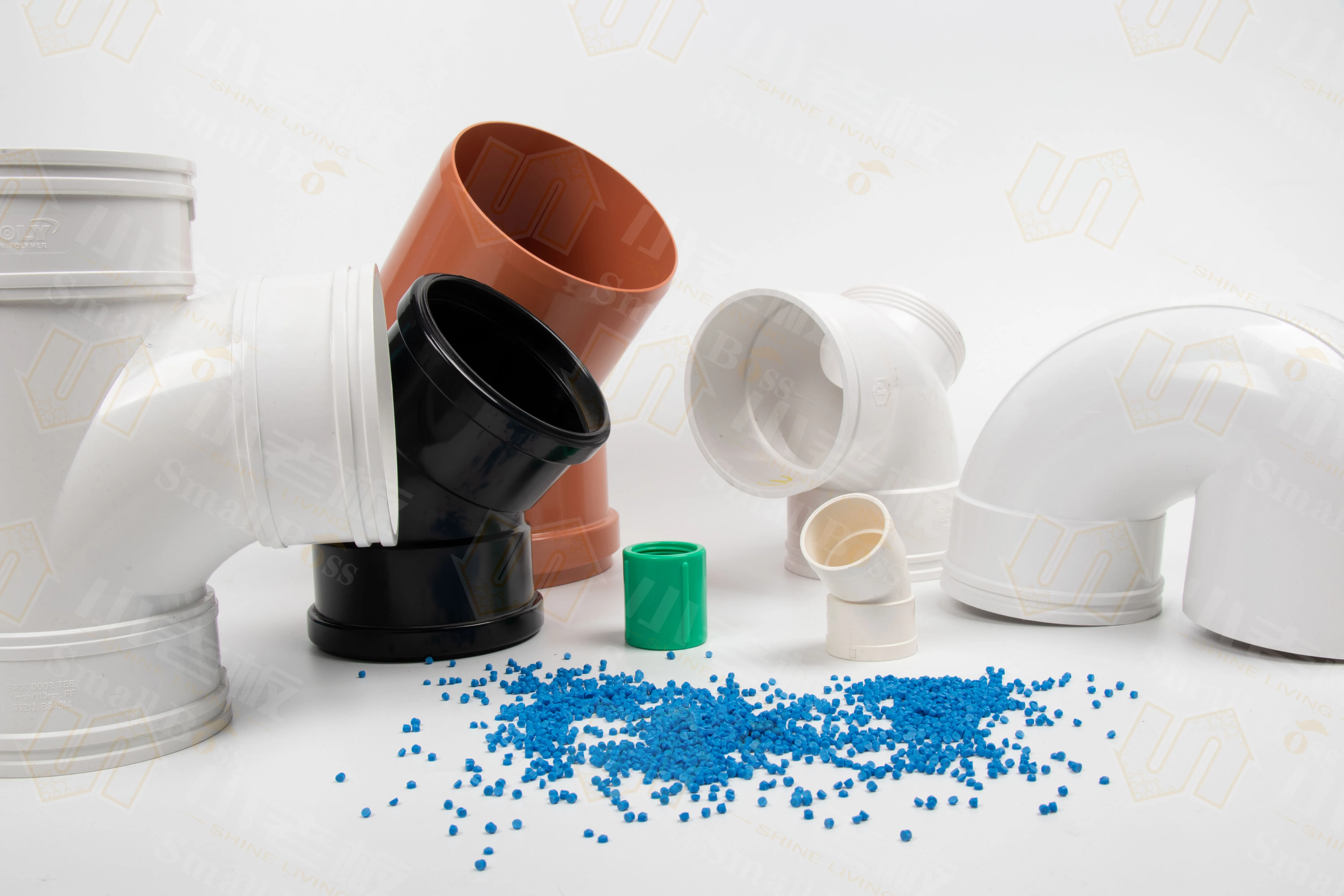
3. Pelletizing Process: Precision Control of Pellet Quality
Through twin-screw extrusion, melt blending, hot cutting, and drying, PVC pellets with smooth surfaces and excellent fluidity are produced. Rigorous screening of impurities ensures a uniform internal structure of the pellets, providing a stable mechanical performance foundation for industrial pipes, which can withstand the pressure and impact in industrial environments.
II. How PVC Pellets Shape the Core Advantages of Industrial Water Supply Pipes
1. Exceptional Corrosion Resistance and Stable Transportation
The smooth surface design of the pellets results in pipes with low internal friction coefficients, effectively ensuring the stable transportation of industrial fluids. The enhanced corrosion resistance provided by the special formula allows the pipes to be used for a long time in various industrial media, reducing maintenance costs.
2. Efficient Construction and Economic Durability
The good fluidity of PVC pellets accelerates the pipe extrusion speed. Combined with convenient connection processes, it significantly improves the construction efficiency of industrial projects. Meanwhile, pipes produced from specially modified pellets have strong weather resistance and a long service life, remarkably reducing the overall cost of industrial pipeline systems.
3. Industrial-Grade Safety Assurance
Strict control throughout the entire process from raw materials to finished products ensures that PVC pellets contain no harmful substances that could affect industrial media. Verified by multiple industrial performance tests, it guarantees the safe and reliable transportation of industrial fluids.
III. The Selection Criteria for High-Quality PVC Pellets in Industrial Applications
- Stable Polymerization Degree: Ensuring consistent performance of industrial pipes
- Industrial Environmental Compliance: Possessing relevant authoritative certifications in the industrial field
- Process Adaptability: Supporting processing techniques that meet industrial requirements
Whether it is for chemical wastewater transportation, industrial cooling water systems, or other industrial fluid transportation scenarios, high-quality PVC pellets, through precise process designs, endow industrial PVC-U water supply pipes with reliable performance. Contact us now to obtain customized solutions and jointly promote efficient and stable industrial pipeline projects!


