
Factors Affecting the Plaster Thickness of Corner Guards
Introduction:
The plaster thickness of corner guards is an important consideration in their installation process. It affects the overall appearance, durability, and functionality of the corner guards. Several factors influence the appropriate plaster thickness for corner guards. This article explores the key factors that impact the plaster thickness of corner guards.

Corner Guard Material:
The material composition of the corner guard plays a significant role in determining the required plaster thickness. Different materials, such as metal, plastic, or composite materials, have varying structural properties. Some materials may require a thicker plaster layer to ensure proper adhesion, while others may have specific manufacturer guidelines regarding plaster thickness.
Corner Guard Design and Profile:
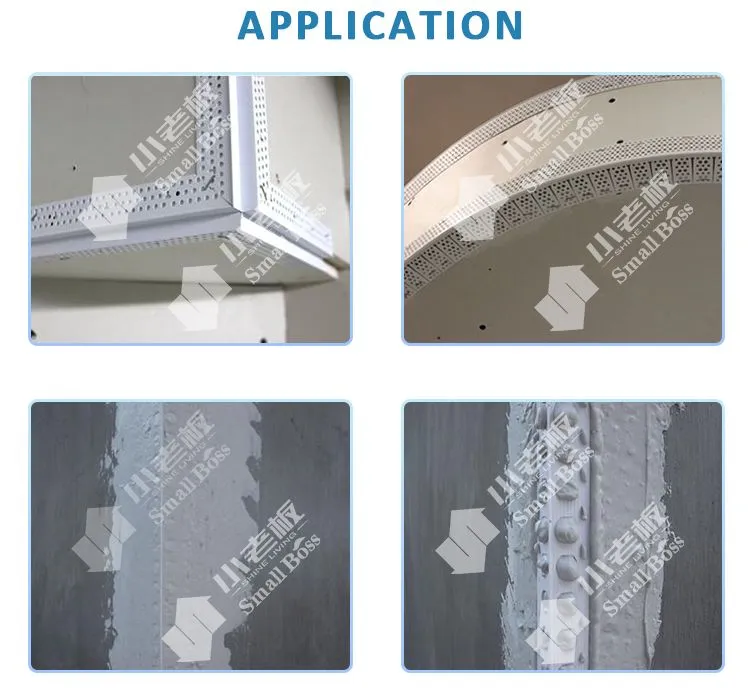
The design and profile of the corner guard can influence the plaster thickness. Corner guards with intricate or irregular profiles may require a thicker plaster layer to achieve complete coverage and a smooth finish. Conversely, corner guards with simple, straight profiles may require less plaster thickness.
Substrate Condition:
The condition of the substrate, which refers to the surface onto which the corner guard is being installed, is crucial for determining the plaster thickness. The substrate should be flat, clean, and free from any defects or irregularities. If the substrate is uneven or damaged, it may require additional plaster thickness to ensure a level and uniform appearance.
Installation Method:
The chosen installation method for the corner guard can impact the required plaster thickness. There are typically two methods: surface-mounted and flush-mounted. In surface-mounted installations, where the corner guard is applied on top of the existing wall surface, a thicker plaster layer may be necessary to provide a seamless transition between the guard and the wall. In flush-mounted installations, where the corner guard is embedded within the wall, the plaster thickness is typically determined by the wall construction method and the desired flush finish.
Desired Aesthetic Result:
The desired aesthetic result also influences the plaster thickness of corner guards. Thicker plaster layers can help achieve a more pronounced, rounded corner appearance. On the other hand, thinner plaster layers may be preferred for a more subtle profile. The aesthetic preferences of the project owner or designer will impact the chosen plaster thickness.
Local Building Codes and Standards:
Local building codes and standards may provide specific guidelines or requirements for plaster thickness in corner guard installations. Compliance with these regulations ensures structural integrity, safety, and uniformity across different projects.
Conclusion:
The plaster thickness of corner guards is influenced by various factors, including the material composition of the guard, its design and profile, the condition of the substrate, the installation method, the desired aesthetic outcome, and local building codes. Considering these factors during the installation process ensures the appropriate plaster thickness, resulting in a visually appealing, durable, and functional corner guard installation. It is essential to consult manufacturers' guidelines and adhere to industry best practices to achieve optimal results.


