
Characteristics of PVC black injection molding plug granules
Onshore Aquaculture Systems
Much has been written about the rapid increase in the number of onshore aquaculture facilities.
This is due to several factors, among them increased demand for seafood due to population growth and a greater understanding of the nutritional benefits of eating fish; increased pollution of seas and oceans and over-fishing, resulting in a decline in fish populations around the globe; and a growing awareness of the significant environmental advantages of closed-containment, recirculating aquaculture system-based technology.
It is this last element that is the key to securing a sustainable future for aquaculture.
Advantages of Recirculating Aquaculture System (RAS) Technology
Recirculating aquaculture systems technology offers several significant advantages over other existing aquaculture methods.
Growing fish in a land-based, closed, and controlled environment reduces the risk of disease contamination.
No antibiotics or disease treatments are involved in a normal production process, so the fish produced are healthier.
Water motion in the rearing tanks allows the growers to exercise the fish, which in some fish species results in a more natural fat and tissue composition.
Since RAS technology is not entirely dependent on proximity to a specific water source, the facility can be built close to market, resulting in a shorter time from water to plate, and reduced transportation costs. Another advantage of recirculating aquaculture systems is that its advanced filtering capabilities significantly reduce water pollution from feed, feces, and chemical waste, making it a much more sustainable alternative to other aquaculture methods.
In terms of efficiency and productivity, RAS enable continuous harvest year-round, and fish grow to commercial size faster when compared with other aquaculture methods.
Faster growth usually means better conversion of feed to fish mass, and overall lower impact on the entire production chain and production costs, thanks to complete control of water temperature and the ability of recirculating aquaculture systems to maintain optimum oxygen and carbon dioxide levels.
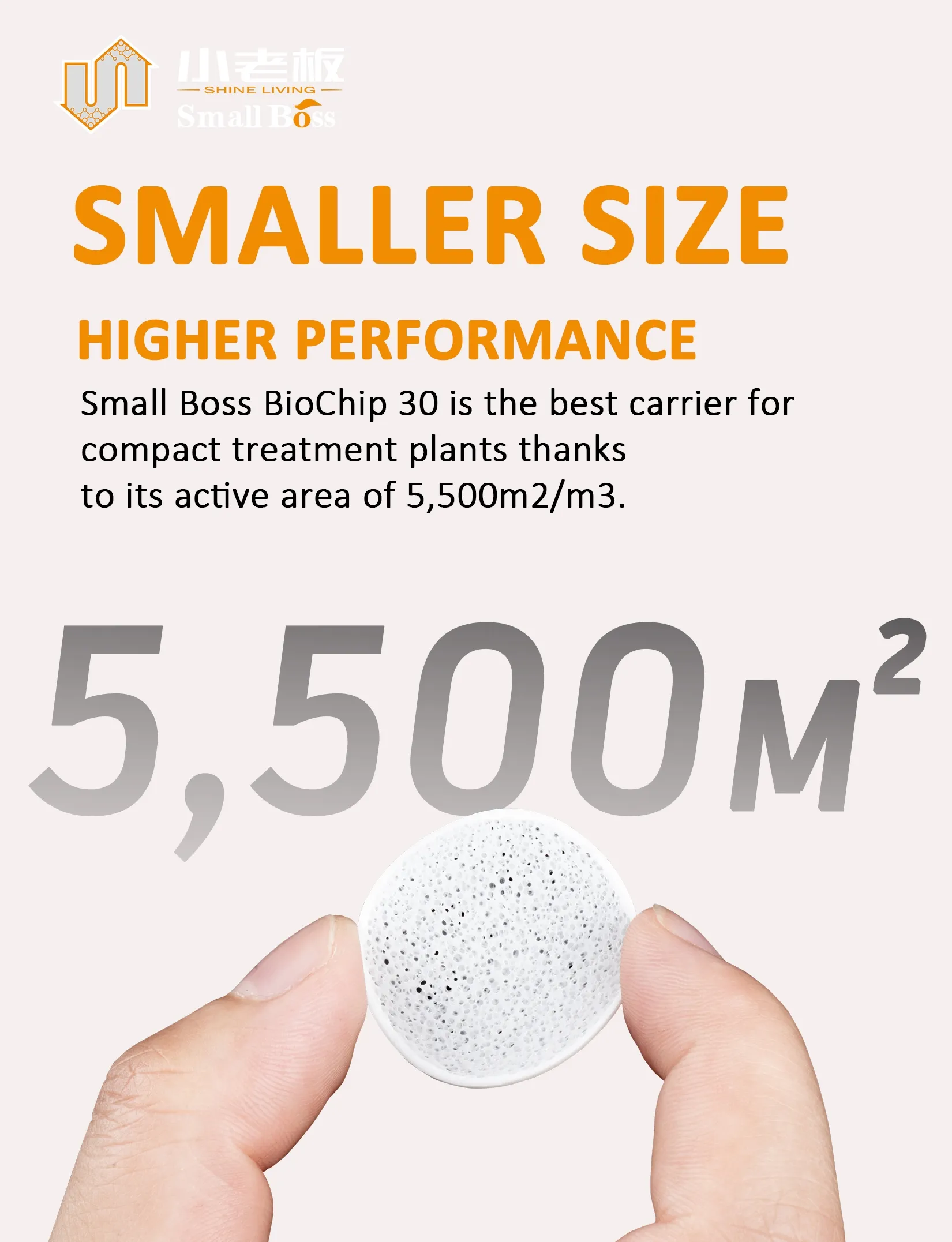
Small Boss provides excellent bio-fillers for RAS aquaculture, such as K1, K3, K5, Biochip, etc.
So, what will the next generation of recirculating aquaculture system facilities look like? As in almost any other industrial field, next-generation recirculating aquaculture systems will harness existing advanced technologies, while refining techniques to further streamline operations and improve facility performance.
We can only envision now, but RAS' demand for MBBR biomedia won't change!


